
A leopard print hijab is a headscarf printed with leopard rosettes: dark, ring-shaped spots on a tan, brown, cream or black base. It is easier to wear than it looks, because those base colours are already in most wardrobes. Pair it with a plain black, beige, brown, olive or denim outfit, keep jewellery small, and let the hijab be the only print you wear. For daily wear in hot, humid weather, modal is the most comfortable fabric. Chiffon is better for functions and evenings.
This guide covers everything we get asked about leopard prints at Qatar Collections: how leopard differs from cheetah and tiger print, which fabric to pick, what colours to wear it with, outfit ideas for college, office, weddings and Eid, how to wash it so the print lasts, and what scholars say about wearing animal prints.
Quick summary
- Best colours to pair: black, beige, camel, chocolate brown, cream, olive, maroon and denim blue.
- Best fabric for daily wear: modal or modal cotton. It is breathable, holds pins and doesn’t slip.
- Best fabric for occasions: chiffon. It is light and flowy and drapes in soft layers.
- Golden rule: one print per outfit. Everything else stays plain.
- New to animal print? Start with a small, tight print on a brown or nude base.
What is a leopard print hijab?
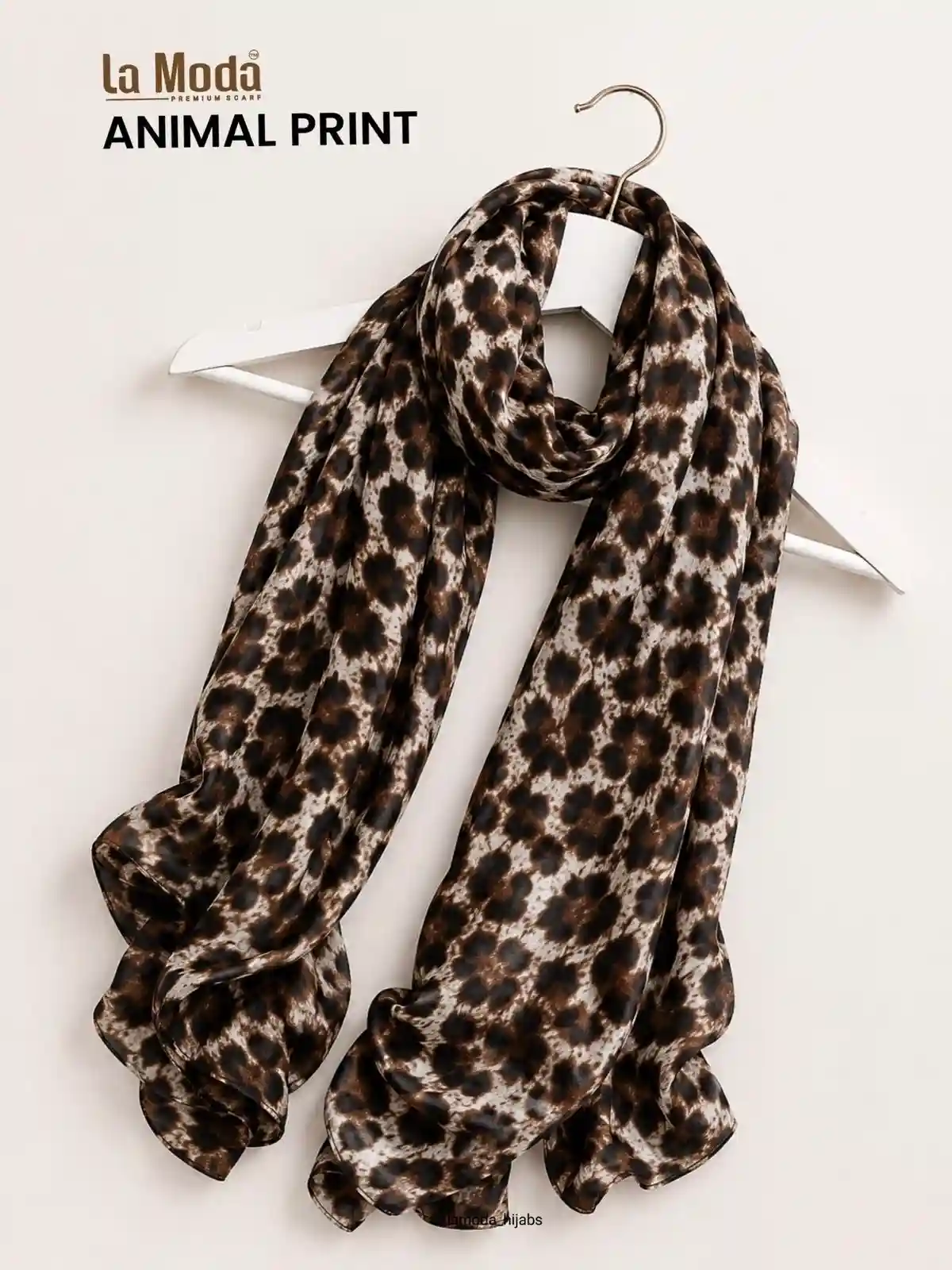
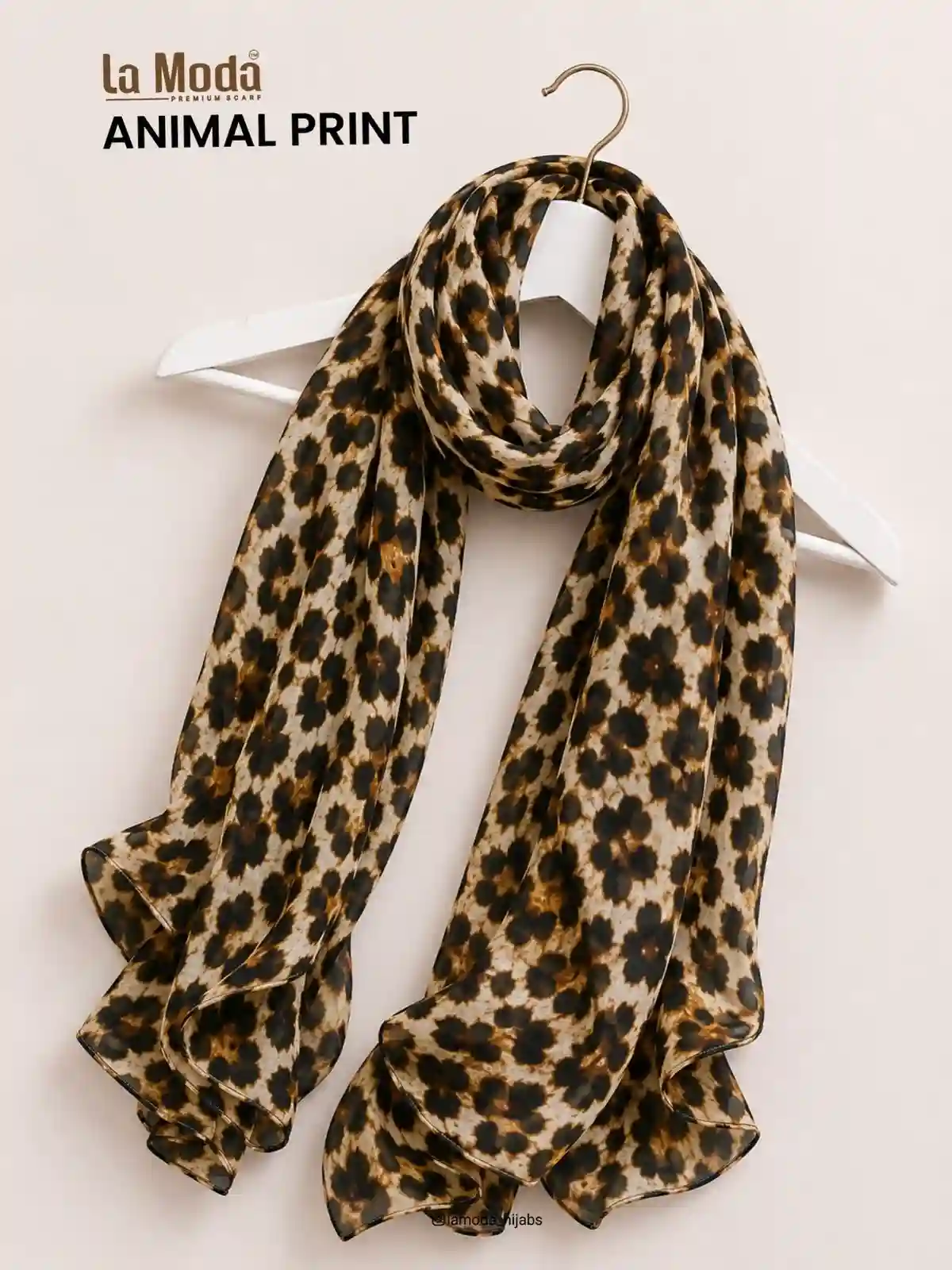
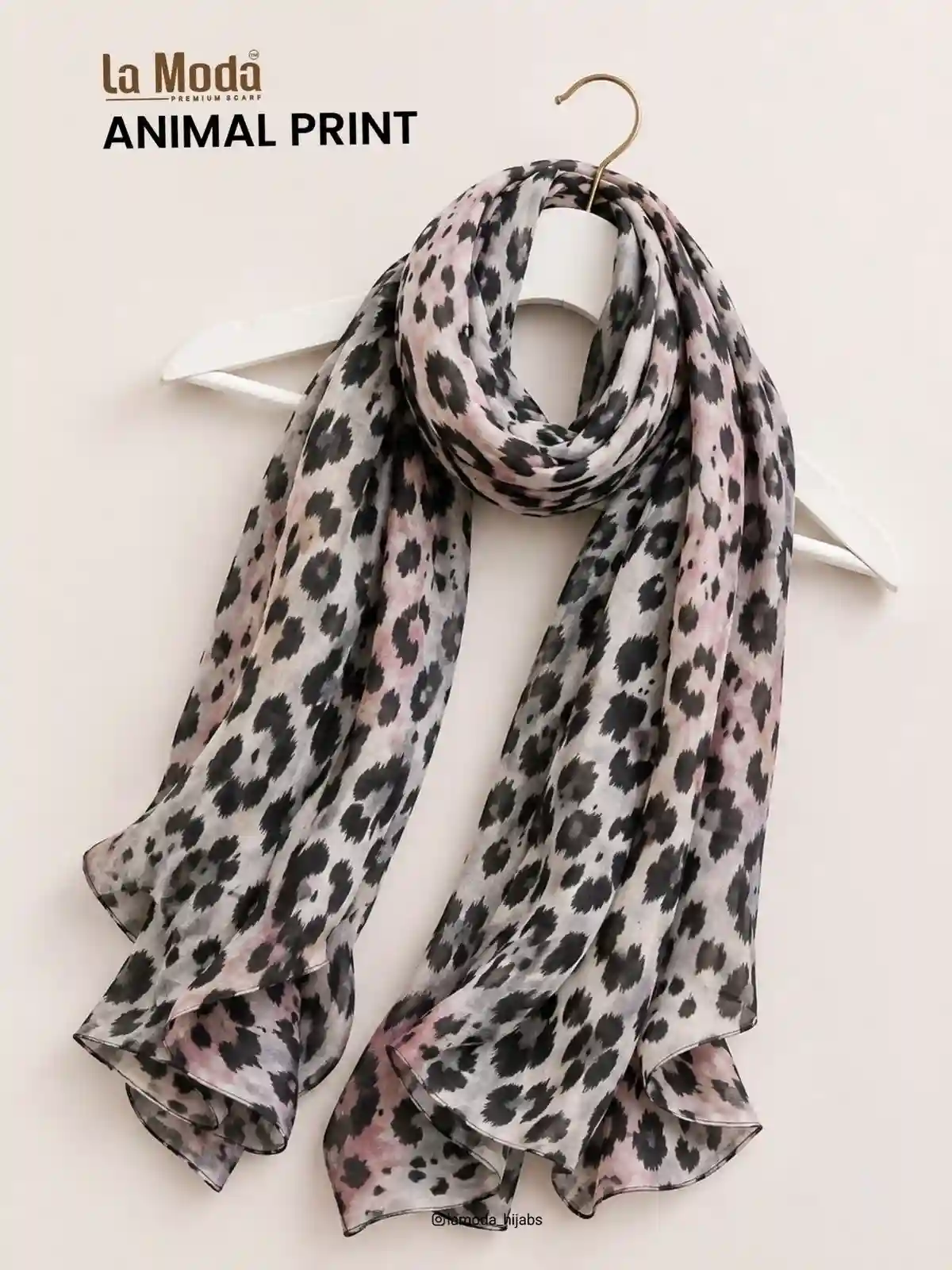
A leopard print hijab copies the coat of a leopard. You get clusters of dark rosettes, often with a lighter or golden centre, scattered over a warm background. The classic version is black and brown on tan, but you will also see leopard on cream, grey, nude pink, black and even blue.
Fashion has treated leopard as a neutral for decades, and the same logic works for a hijab. The brown, black and cream in the print already show up in abayas, kurtis, trousers and jackets, so one leopard scarf can go with most of what you own.
Why leopard print hijabs are trending in 2026
Interest is rising fast. Google Keyword Planner data for India shows searches for “leopard print hijab” climbing from about 1,300 a month in October 2025 to around 6,600 a month from July to September 2026, roughly five times higher in under a year. Searches for “cheetah print hijab” and “tiger print hijab” have followed the same curve.
There are a few reasons for this:
- Leopard is back on the runways. Mainstream fashion has pushed leopard as a wardrobe staple again, and modest fashion has picked it up.
- It is an easy step away from plain colours. A print hijab freshens up an all-black abaya without having to buy a new outfit.
- It photographs well. Leopard hijab outfits are all over Instagram reels, Pinterest boards and TikTok.
- Better fabrics. Soft modal and brushed prints look more expensive and less “costume” than the shiny polyester scarves of a few years ago.
Leopard vs cheetah vs tiger print: what’s the difference?
People use these names interchangeably, and many shops label them loosely. The patterns do look different, though, and that changes how bold the hijab looks.
| What the pattern looks like | How bold it looks | Best for | |
|---|---|---|---|
| Leopard | Rosettes: broken rings of dark spots, often with a lighter centre, packed fairly close | Medium to bold | Everyday statement looks, weddings, outings |
| Cheetah | Solid, round single spots spaced evenly on a golden or cream base | Softer and cleaner | College, office, first-time animal print wearers |
| Tiger | Long dark stripes on orange, gold or white | Very bold | Evenings and fashion-forward looks |
| Snake / zebra | Scales or high-contrast black and white stripes | Bold, graphic | Monochrome outfits |
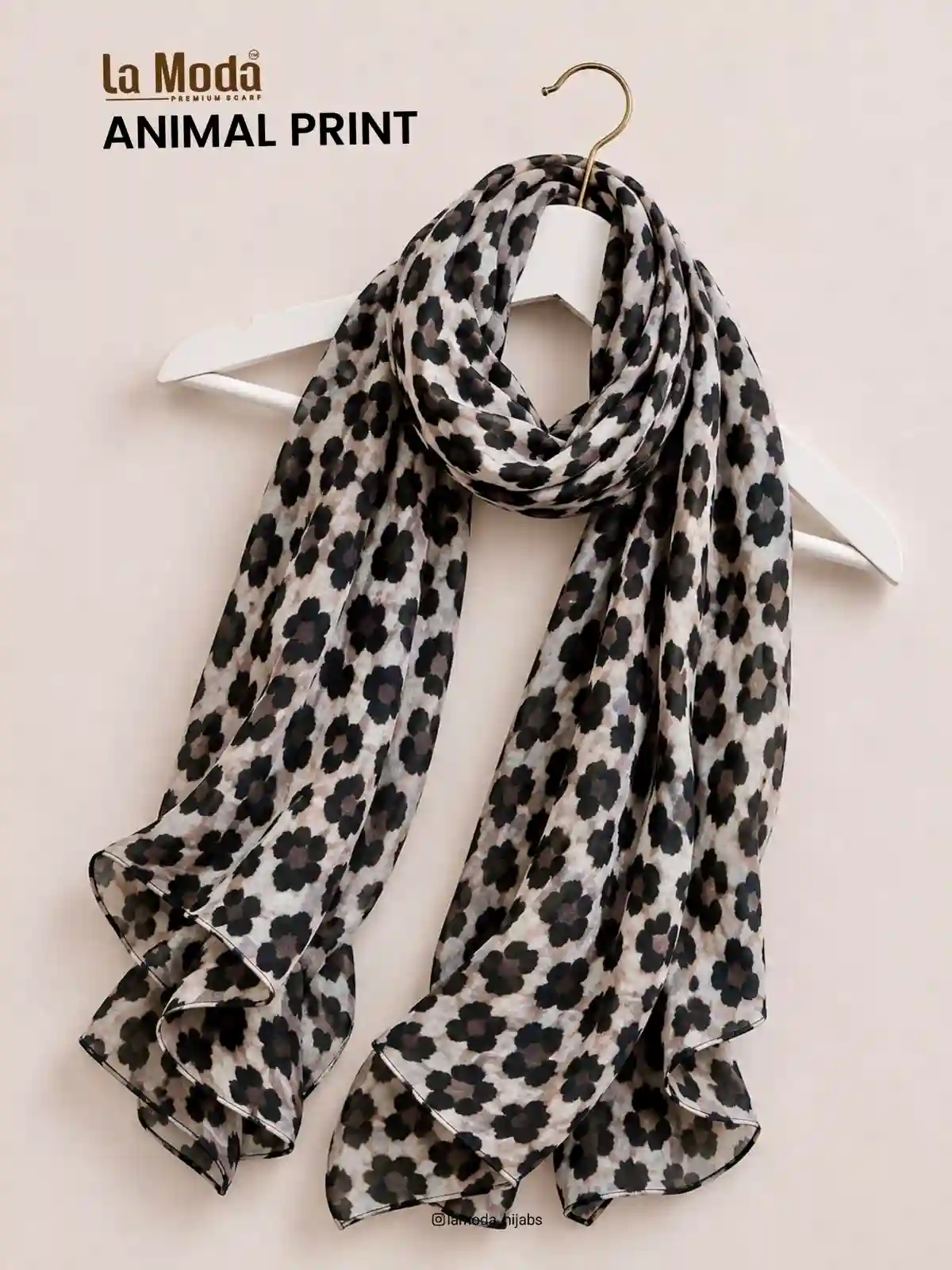
If you want the leopard look without much contrast, choose a cheetah print or a “brushed” leopard where the spots are softened. Our La Moda cheetah print hijab is a good example of the softer style.
Choosing the right fabric for a leopard print hijab
Fabric matters more with a print than with a plain hijab. A stiff or shiny fabric makes the print look cheap, and a slippery one bunches the pattern around your face. These are the fabrics you’ll come across most:
| Fabric | Feel | Coverage | Grip | Best for |
|---|---|---|---|---|
| Modal / modal cotton | Soft, matte, close to cotton | Good, mostly opaque | Holds pins well | Daily wear, college, office, Kerala heat |
| Brushed modal | Slightly peached, cosy | Good | Very good, rarely slips | Daily wear, travel, cooler months |
| Chiffon | Light, airy, slight sheen | Sheer, so wear an undercap | Slippery, needs pins | Weddings, Eid, parties, layered drapes |
| Jersey | Stretchy, T-shirt feel | Good | Excellent, often no pins needed | Sport, quick wraps, busy mornings |
At Qatar Collections, the La Moda leopard prints are modal or brushed fabric, and the Zera animal prints are chiffon. If you mostly want something comfortable for long days, start with modal. You can read more about the blend on our modal cotton hijab page.
Watch out for sheer prints. Some fashionable leopard scarves are very thin. Hold the hijab up to the light before you wear it. If you can see through it, layer it over an undercap in black or brown so you stay fully covered.
How to pick the right print size and base colour
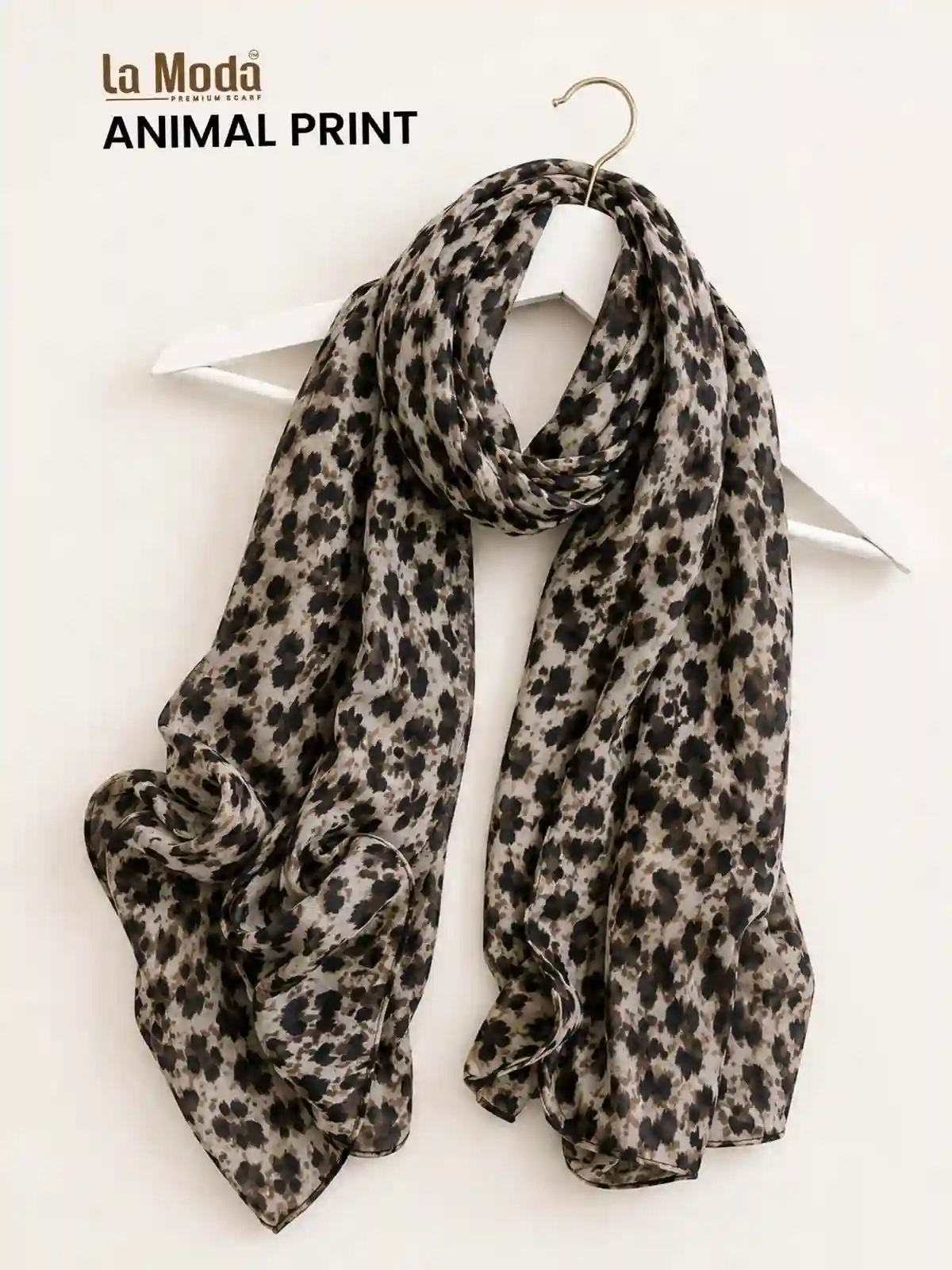
- Small, tight print: calm and subtle. It looks almost like a texture from a distance, which suits office, college and daily wear.
- Large print: eye-catching. Save it for outings, evenings and occasions where the hijab is the main piece.
- Brown, tan or caramel base: the classic look. It suits warm and olive skin tones, which covers most Indian complexions.
- Cream or nude base: softer and brighter around the face. It goes well with beige, white and pastel abayas.
- Black or grey base: moodier and more dramatic. It works best with all-black or monochrome outfits.
What colours go with a leopard print hijab?
Look at the print first and find its base and spot colours. Then build the outfit from one of those colours or from a plain neutral. Here is a quick cheat sheet:
| Outfit colour | Works with leopard? | Why |
|---|---|---|
| Black | Always | Picks up the dark spots and makes the print stand out |
| Beige, camel, tan | Always | Matches the base for a soft, tonal look |
| Chocolate brown | Always | Warm and rich. Great for winter and evenings |
| Cream and white | Yes | Fresh and bright for summer and daytime |
| Denim blue | Yes | Denim acts as a neutral for casual looks |
| Olive, emerald, maroon, mustard | Yes, for bolder looks | Warm, deep shades that suit the warm undertones of leopard |
| Pastels and cool greys | Use with care | Can clash with a warm brown print. Better with a grey or nude leopard |
| Neon or another print | Avoid | Fights with the leopard for attention |
7 leopard print hijab outfit ideas
1. With a black abaya (the easiest look)
A brown leopard hijab with a plain black abaya works almost every time. The black matches the spots and the hijab brightens the face. Add black flats or loafers and a small gold stud.
2. College or campus
Wear a small-print modal leopard hijab with a cream or white long kurti, straight black trousers and white sneakers. It looks put-together but still relaxed, and modal stays comfortable through long lecture days.
3. Office and work
Go for a tight cheetah or brushed leopard print with a black or camel blazer, a plain long top and tailored trousers. Keep the drape simple and neat so it reads as polished rather than loud.
4. Weddings, nikah functions and Eid
Choose a chiffon leopard hijab over a solid maroon, emerald, chocolate or black dress or abaya. Let the chiffon fall in a soft layered drape, and add a statement brooch or a neat hijab pin. Pick a print with a cream or golden base for a richer, festive look.
5. Weekend casual with denim
Pair a leopard hijab with a denim long shirt or denim abaya and a white or beige inner. Denim and leopard is a classic pairing, and it works well for shopping trips, cafés and travel.
6. Monsoon and rainy days
Brown, olive and black outfits hide splashes and pair naturally with leopard. Pick a modal or brushed hijab over chiffon, because it won’t cling when the air is damp. Secure it with hijab magnets or pins so it stays put under an umbrella.
7. Winter and travel
A brushed leopard hijab with a chocolate or camel coat, a cream sweater or high-neck inner and dark boots looks warm and stylish. It’s a good choice for trips to cooler places or Gulf winters.

3 easy ways to wrap a leopard print hijab
The simple shoulder drape
- Put on an undercap and place the hijab over your head with one side longer than the other.
- Pin under the chin.
- Take the long side across the front of your neck and over the opposite shoulder.
- Pin at the shoulder and let the end fall loosely down the back.
This shows off the print without bunching it up near your face. It is the best everyday style for modal hijabs.
The layered chiffon wrap
- Start the same way with the long side.
- Wrap the long side once around the head, loosely, and pin it above the ear.
- Pull the remaining fabric forward to fall over the chest in soft folds.
The layers soften a bold print, so this wrap works well for weddings and Eid.
The front-covering style
- Centre the hijab so both sides are equal.
- Pin under the chin and bring both ends forward over the chest.
- Pin each side at the shoulder.
This gives full chest coverage and a neat, symmetrical look. It is popular for office wear and prayer-friendly outfits.
Common mistakes to avoid
- Mixing prints. A leopard hijab with a floral or checked abaya is too busy. Keep the outfit solid.
- Too much bling. Heavy jewellery plus a bold print competes for attention. Small studs or a watch are enough.
- Wrapping too tightly. Tight wraps squash the pattern into a blur. Leave some fabric to drape.
- Ignoring sheerness. Check thin prints against the light and use an undercap.
- Clashing undertones. A warm brown leopard looks off with icy grey or neon. Match warm with warm and cool with cool.
Is it allowed to wear a leopard print hijab in Islam?
This is a fair question, and scholars don’t all agree on it. We are a store, not a fatwa body, so here is a summary of the main views. Please ask a scholar you trust.
- Generally permissible: some Hanafi scholars, for example in this SeekersGuidance answer, hold that animal-pattern clothing is allowed. Their reasoning is that a pattern of spots or stripes is not a picture of a living being, and things are permitted unless there is a clear prohibition.
- Depends on adornment: the IMAM-US Q&A says the issue is whether the print is commonly seen as adornment (zinah) in your community. If it is, it shouldn’t be worn in front of non-mahram men. If not, it is allowed.
- Discouraged: others, such as Darul Uloom Trinidad & Tobago, advise against animal prints on head coverings.
Many women who wear leopard print choose subtle, small-scale prints in muted tones for everyday wear. They keep bolder prints for women-only gatherings and family functions.
How to wash and care for a leopard print hijab
Printed hijabs fade mostly from hot water, harsh detergent, friction and strong sun. A few simple habits keep the print sharp for longer:
- Hand wash in cold water with a mild liquid detergent. If you use a machine, choose a gentle cycle and put the hijab in a mesh laundry bag.
- Wash it inside out and with similar colours.
- Don’t wring it. Press the water out gently with a towel.
- Dry it in the shade. Direct sunlight is the quickest way to fade a print.
- Skip bleach and fabric softener. Both can dull the colours.
- Iron on low heat, on the reverse side. Use the lowest setting for chiffon.
- Store it folded in a drawer or box, away from light.
Always follow the care label first if it says something different.
Shop leopard print hijabs at Qatar Collections
You can browse every design in one place on our Animal Print Hijab collection, with soft modal and chiffon prints from Zera and La Moda. At the time of writing they start from around ₹260 and ship across Kerala and the rest of India. A few popular picks:
- La Moda Leopard Print Hijab, premium modal scarf: the everyday classic in brown tones.
- Leopard Print Modal Hijab with a rosette pattern: a bolder, richer print.
- Brushed Leopard Animal Print Hijab: soft spots and a cosy feel, good for beginners.
- La Moda Cheetah Print Hijab: cleaner spots for office and college.
- Zera Leopard Print Hijab: chiffon for functions and Eid.
- Zera Animal Print Chiffon Hijab, double-side print: the print shows on both sides, so every fold looks finished.
Want plain colours for the days between prints? Try the Moja hijab range, or read why Moja jersey hijabs suit Kerala weather.
Frequently asked questions
What colour abaya goes with a leopard print hijab?
Black is the safest choice. Beige, camel, chocolate brown, cream, olive, navy and maroon also work well, as long as the abaya is a solid colour with no print of its own.
Is a leopard print hijab suitable for daily wear?
Yes. Choose a small or brushed print in modal fabric, keep the outfit neutral, and it will look calm enough for college, office and errands.
Which fabric is best for a leopard print hijab in hot weather?
Modal or modal cotton. It is breathable, soaks up sweat, stays matte and holds pins, which makes it more comfortable than chiffon or polyester in humid places like Kerala.
What is the difference between a leopard and a cheetah print hijab?
Leopard print has rosettes, which are broken rings with lighter centres packed closely together. Cheetah print has solid round spots spaced evenly apart, so it looks cleaner and a little more subtle.
Can I wear a leopard print hijab to a wedding or on Eid?
Yes. Pick chiffon or a print with a cream or golden base, wear it with a solid jewel-tone or black outfit, and use a layered drape with one neat brooch.
Is a leopard print hijab see-through?
It depends on the fabric. Modal and brushed prints are usually opaque, while chiffon is sheer. Wear chiffon over a matching undercap for full coverage.
How do I stop my leopard print hijab from fading?
Hand wash it in cold water with mild detergent, don’t wring it, dry it in the shade, avoid bleach and softener, and iron on low on the reverse side.
Is wearing an animal print hijab haram?
Scholars differ. Many consider animal patterns permissible because they are not images of living beings, some say it depends on whether the print counts as adornment, and a few discourage it. Ask a scholar you trust for guidance on your situation.